


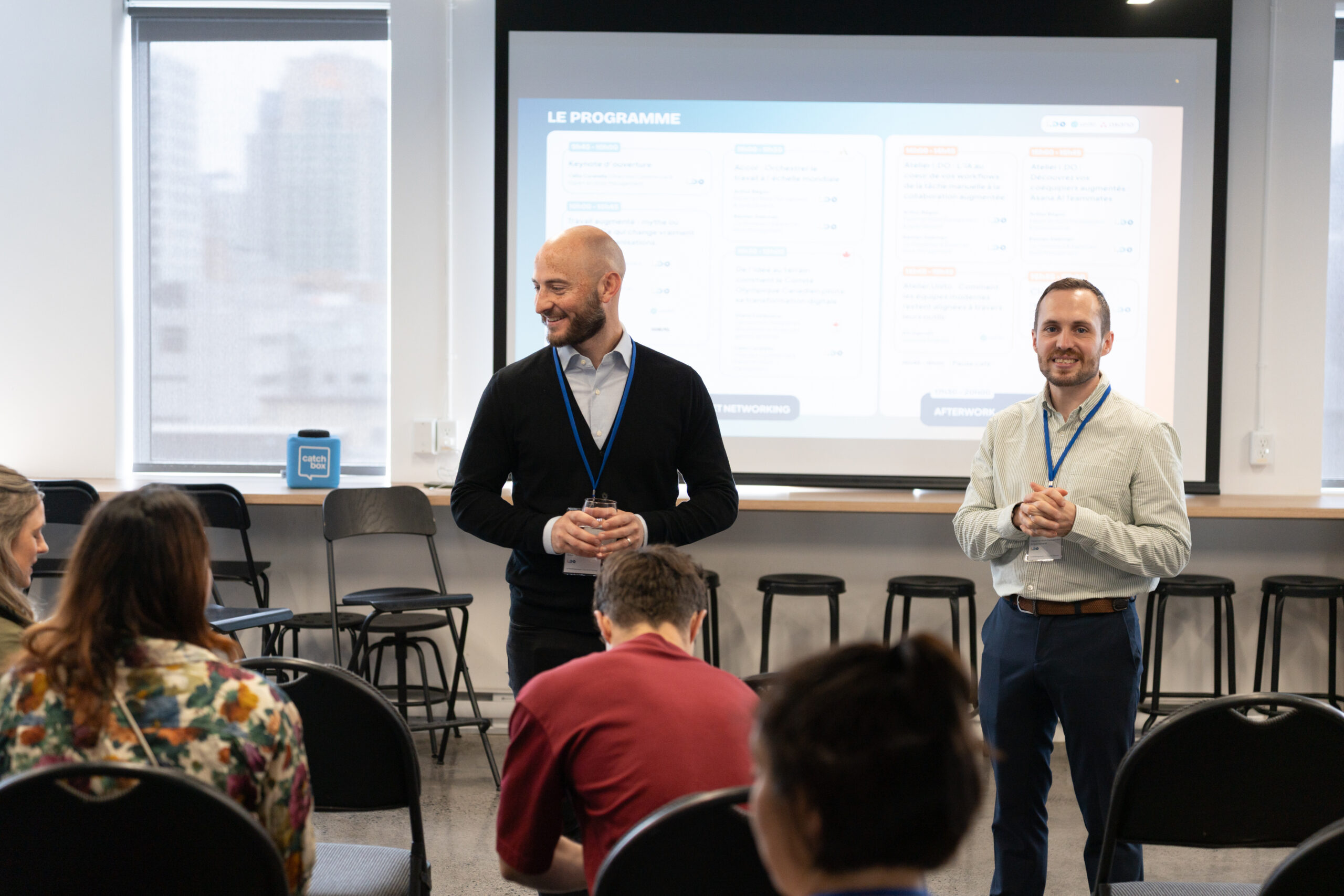
On May 13, i.DO brought together clients, prospects, and subject matter experts in Montreal for a day focused on augmented work. The event was co-created with Unito and followed by an afterwork gathering with the local community. The agenda included an opening keynote, a panel discussion, customer stories, practical workshops on AI in workflows, and live demonstrations of Asana AI Teammates.
If you could not make it in person, here is what mattered most. More than the format or the conversations themselves, the day confirmed one thing: the real question is no longer whether organizations will bring more AI into the way they work, but how to do it in a way that is useful, realistic, and financially sustainable.
1. The market has moved beyond the observation phase
From the very first conversations, one thing was clear: augmented work is no longer a distant possibility. It is already taking shape across operations, service teams, marketing, and leadership.
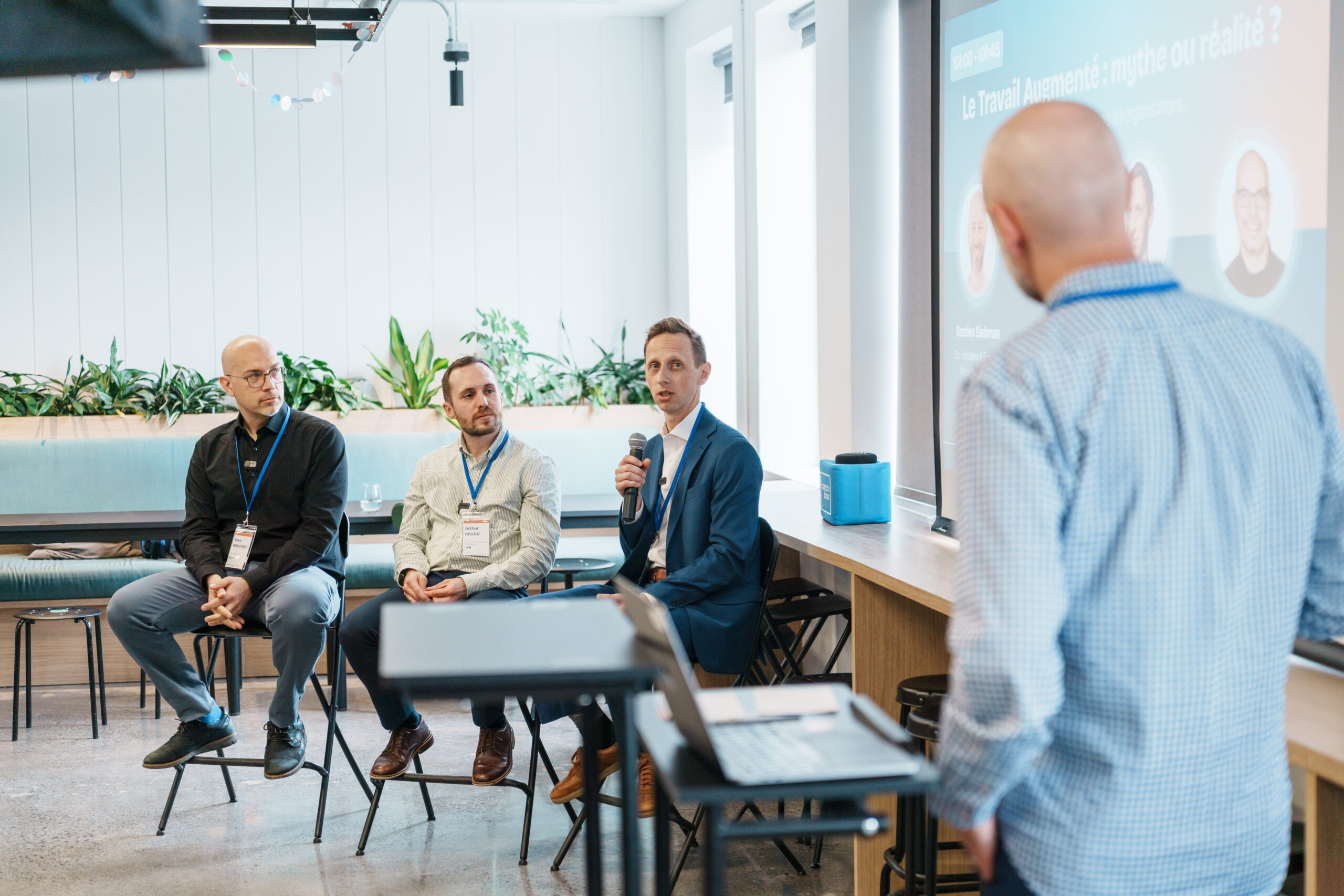
What gave the discussion real weight was the tone of the panel. There were very few simplistic certainties and very few exaggerated promises. Instead, the conversation stayed grounded in what is actually changing: AI is gradually becoming part of day-to-day tools, agents are turning into something tangible, and companies are already looking for viable models to move from experimentation to adoption.
In other words, this is no longer just a topic of curiosity. It has already become a topic of execution.
2. Real use cases are what create buy-in
Throughout the day, it was not the big ideas that left the strongest impression. It was the examples people could actually imagine applying in their own context.
Accor’s case illustrated this especially well. Of course, the scale is impressive. But the real question in the room was different: what can another organization take from this logic and apply in its own environment? The possibility of auditing and optimizing an existing structure, without rebuilding everything from scratch, made the topic immediately actionable.
The same was true for the Canadian Olympic Committee. In an environment shaped by multiple dependencies, long planning cycles, logistics, and many stakeholders, visibility into timelines, responsibilities, and progress becomes a very concrete operational advantage.
What these examples showed is that the right workflows do more than organize work more neatly. They make execution clearer, smoother, and easier to coordinate.
3. What teams want from AI is highly operational
The i.DO workshop on AI in workflows confirmed a key point: teams are not looking for an abstract vision of AI. They want to see how it fits into the work they already do and what it can improve right away.
What resonated most during the day were the demonstrations that produced something directly usable: document reading, PDF analysis, scoring, brief analysis with recommendations, marketing workflows, ticketing, and the ability to turn an input into a concrete next action.
If you want to go deeper on that point, we have already unpacked this logic in our article on Asana AI Studio and intelligent agents in workflows, with concrete examples of intelligent workflows built directly in Asana.
And if you want to see how far this can go in a very specific scenario, you can also read this complete guide to an AI Studio + Script Action workflow. We also share a kit with the scripts and prompts used to reproduce this kind of automation.
4. AI Teammates are already changing how we think about collaboration
One of the most striking moments of the day was clearly the introduction to AI Teammates.

What stood out to participants was not just the performance of an AI that can respond. It was the shift in mental model it creates. You are no longer just asking a tool a question. You assign work, provide context, move on to something else, and then come back to review a deliverable.
That kind of parallel collaboration makes the topic immediately more tangible. When a system can produce slides, structure a document, or handle part of a workflow on your behalf, the conversation stops being about theoretical potential. It becomes about a new way of organizing work between people and systems.
We explored that shift in more detail in our introduction to AI Teammates in Asana.
5. ROI and the economic model are already part of the conversation
Another strong signal emerged very quickly during the discussions: pricing, credits, and profitability are already top of mind.
That is a good sign. It means the market has already moved past the stage of simple fascination. Organizations do not just want to know whether these approaches work. They want to understand whether they can deploy them in a way that is sustainable, aligned with their constraints, and defensible from a business standpoint.
That level of scrutiny is healthy. It forces the conversation beyond impressive demos and back to what really matters: which workflows are worth redesigning, which gains can be measured, and under what conditions AI actually makes work simpler instead of adding another layer of complexity.
What to take away if you were not in the room
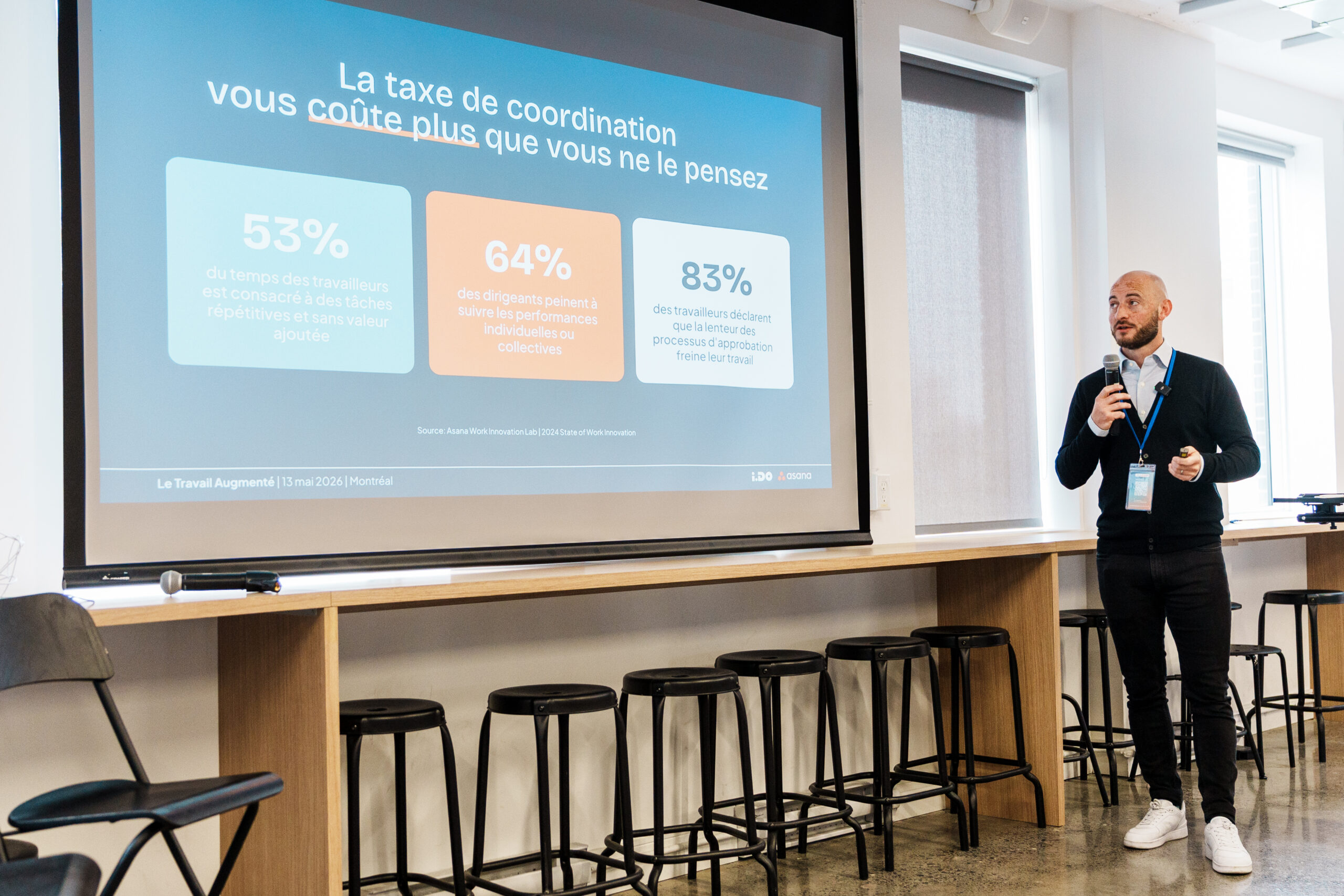
The Montreal event confirmed a tension many organizations are already dealing with: too many tools, too much fragmentation, and not enough clarity on the best way to structure work and connect systems.
That is exactly where augmented work becomes interesting. Not as a marketing promise, but as a practical response to very current problems: limited visibility, coordination overload, manual workflows that are too heavy, and the difficulty of scaling effectively.
What we saw in Montreal is that the most useful conversations rarely start with the technology alone. They start with a simpler question: where are the most costly points of friction in your organization today, and how can work be distributed more effectively across teams, tools, and AI?
Go further
If you want to explore the topics covered during the event in more depth, here are three useful resources:
- Asana AI Studio: Enter the New Era of Smart, Semi-automated Agents
- Intro to AI Teammates: How AI Agents Are Changing the Way Teams Work in Asana
- How to Staff Hundreds of Projects Automatically with Asana AI Studio
You can also watch our our webinar on demand for a demo-style walkthrough of several real use cases.
Discuss it in your own context
If you want to see what this kind of workflow could look like in your organization, you can book a meeting here.
We can help you identify the most relevant use cases, what can already be automated today, and where this approach genuinely makes sense.