


Artificial Intelligence won’t fix chaos, it will amplify it. Before positioning AI as a solution, ask yourself one question: is your organization structured enough for it to work?
Why AI Adoption Can’t Wait
AI has moved from “nice to have” to business imperative. It’s embedded in daily work tools, transforming how teams create tasks, align on priorities, and communicate progress. It can summarize meetings, flag risks, automate repetitive actions, and even run end-to-end workflows without human input. Daily AI users are 63% more likely to see AI as a teammate compared to monthly users, signaling a fundamental shift in how work gets done. Organizations that delay strategic AI adoption risk falling behind competitors who are already experiencing productivity gains.
The data tells a compelling story: 61% of executives are confident that AI will help their companies reach their objectives more effectively than traditional methods. Yet implementation success rates remain disappointingly low. Only 18% of organizations have successfully scaled AI across their business, revealing a critical execution gap that separates AI leaders from laggards.
Yet, only 30% of U.S. knowledge workers say their company has formal policies or guidance on how to use AI at work, revealing a critical gap in readiness – Asana, AI and the Alignment Gap (2024).
This isn’t about hype. This is about operational transformation,if the environment is ready for it.
What AI Actually Delivers (In the Right Context)
In structurally mature organizations, AI enhances clarity, speed, and precision across four key dimensions:
- Elimination of repetitive manual work: AI transforms messages into tasks, assigning owners automatically, maintaining real-time status without human intervention.
- Communication noise compression: AI generates actionable summaries and intelligent updates across channels, cutting through information overload.
- Enhanced decision-making: AI offers data-driven recommendations in context, leveraging your organisation’s Work GraphⓇ to surface insights you might otherwise miss.
- End-to-end workflow automation: AI agents can now manage routine operations independently, escalating only when human intervention is needed.
But all of that is conditional. AI does not invent order. It multiplies what already exists.
The 3 Primary Reasons AI Projects Fail
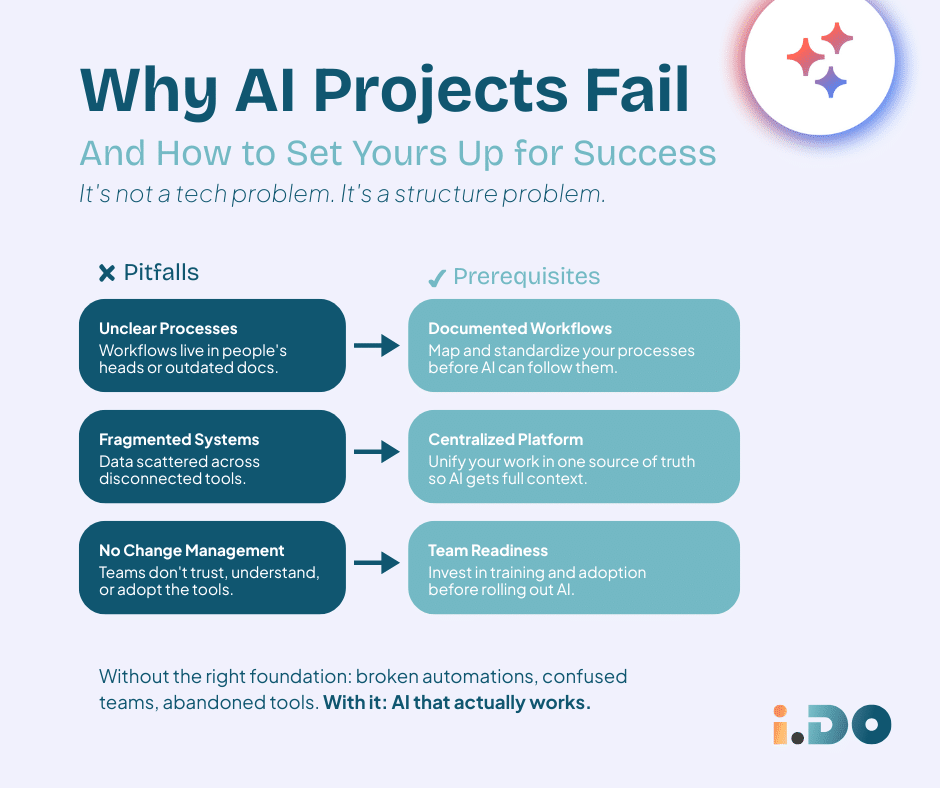
Most failed AI initiatives aren’t technical failures—they’re structural ones. Three patterns dominate the failure landscape:
1. Low process clarity
If workflows aren’t defined, AI can’t follow them. Organizations often attempt to automate processes that exist only in employees’ heads or buried in outdated documentation.
2. Fragmented systems
When data is scattered across disconnected tools, AI can’t connect the dots. Without a centralized work platform, AI lacks the compréhensives context needed to deliver meaningful insights.
3. No behavioral readiness
Teams don’t trust, understand, or adopt the tools. Without proper change management and training, even the most sophisticated AI implementations get abandoned.
The result: automations that don’t work, features that add confusion, and tools that collect digital dust.
AI Is a Multiplier, rarely a Fix
The core truth is this: AI will amplify whatever system you plug it into. If you’re already clear, aligned, and structured, AI will accelerate performance. If you’re chaotic, misaligned, or undocumented, AI will accelerate dysfunction.
Organizations that approach AI as a band-aid for broken processes inevitably face disappointment. AI cannot fix fundamental operational issues, it can only expose them faster.
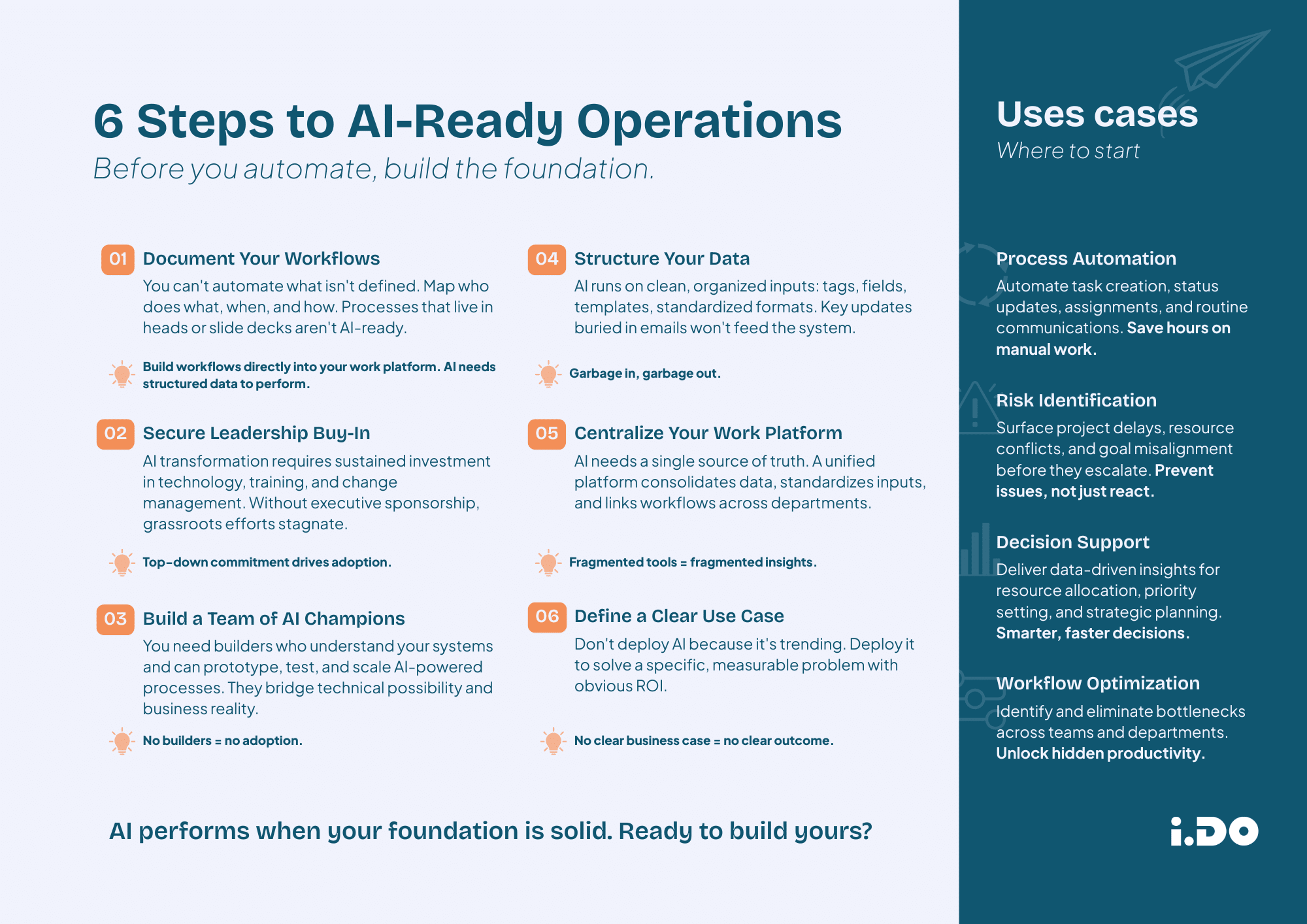
6 prerequisites for Successful AI implementation
1. Documented, Repeatable Workflows
You can’t automate what isn’t defined. AI needs input/output clarity: who does what, when, and how. If your processes live in heads or slide decks, you’re not ready.
Better yet: Build your workflows directly into a work management platform like Asana. When processes are embedded in your operational system, AI can access the structured data it needs to perform effectively.
2. A Core Group of Builders > Leadership Buy-in and Strategic Commitment
Before building anything, secure executive sponsorship. AI transformation requires sustained investment in technology, training, and change management. Without leadership driving adoption from the top, grassroots efforts typically stagnate.
3. A Core Group of AI Champions
AI tools don’t deploy themselves. You need a dedicated team of builders, technically capable individuals who understand your systems and can prototype, test and scale AI-powered processes.
These AI champions serve as the bridge between technical possibility and business reality. They translate organizational needs into AI solutions and guide teams through adoption challenges.
No builders = no adoption.
4. Structured, Accessible Data
AI can’t read minds. It works clean and structured data inputs including tags, fields, templates, and standardized formats. If your key updates are buried in email threads or left undocumented, you’re not feeding the system what it needs to perform.
This is where a work management platform becomes critical. When your operational data lives in a structured system, AI can leverage it effectively.
5. A Centralized Work Platform
AI needs a single, reliable source of truth. A comprehensive work management platform like Asana consolidates data, standardizes inputs, and links workflows across departments.
Spread across ten disconnected tools? The AI won’t see the whole picture. Fragmented systems produce fragmented AI insights.
Modern work management platforms serve as the foundation for AI success by providing:
- Unified data architecture
- Standardized workflow templates
- Cross-functional visibility
- Integration capabilities with existing tools
6. A Clear Strategic Use Case
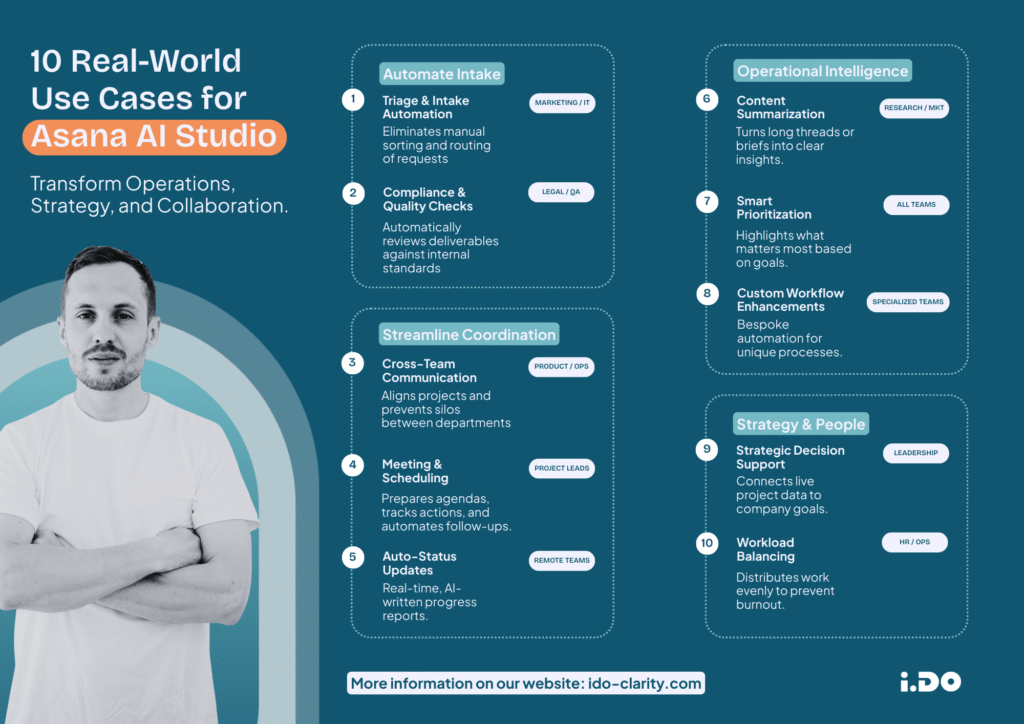
Don’t deploy AI because it’s trending. Deploy it to solve specific, measurable problems: high-frequency repetitive tasks, communication bottlenecks, alignment gaps, or visibility issues.
Target AI implementations where the value is obvious and quantifiable:
- Process automation: eliminate manual task creation, status updates, and routine communications
- Risk identification: surface project delays, resource conflicts, and goal misalignment before they impact outcomes
- Decision support: provide data-driven insights for resource allocation, priority setting, and strategic planning
- Workflow optimization: identify and eliminate productivity bottlenecks across teams and departments
If the business case isn’t clear from the start, the outcome won’t be either. Successful AI deployments solve real business problems, not theoretical ones.
Ask Yourself: Are You Actually Ready?
Use this readiness assessment to evaluate your AI implementation potential.. If you hesitate on any of the following, your AI rollout will struggle:
- Process maturity: Are your workflows clearly documented and embedded in systems or would the AI just get lost in operational chaos?
- Team readiness: Do you have executive sponsorship and a dedicated group of AI champions who can prototype and scale automation?
- Data infrastructure: Are your tools capturing enough structured data for the AI to work with effectively?
- System Integration: Is your work centralized on one platform like Asana or scattered across disconnected systems?
- Strategic Clarity: Do you know exactly why you’re using AI, and what measurable outcomes it’s meant to deliver?
Answer honestly. Because AI won’t fix what’s broken. It will just expose it faster.
The Path Forward: Building AI-Ready Organizations
Organizations ready for AI transformation share common characteristics: they’ve invested in process documentation, established clear data governance, secured leadership commitment, and built their operations on unified platforms that AI can leverage effectively.
The question isn’t whether AI will transform work, it’s whether your organisation will be ready when it does. Research shows that successful AI adoption hinges on open conversation, custom-tailored training, and a culture of continuous learning.
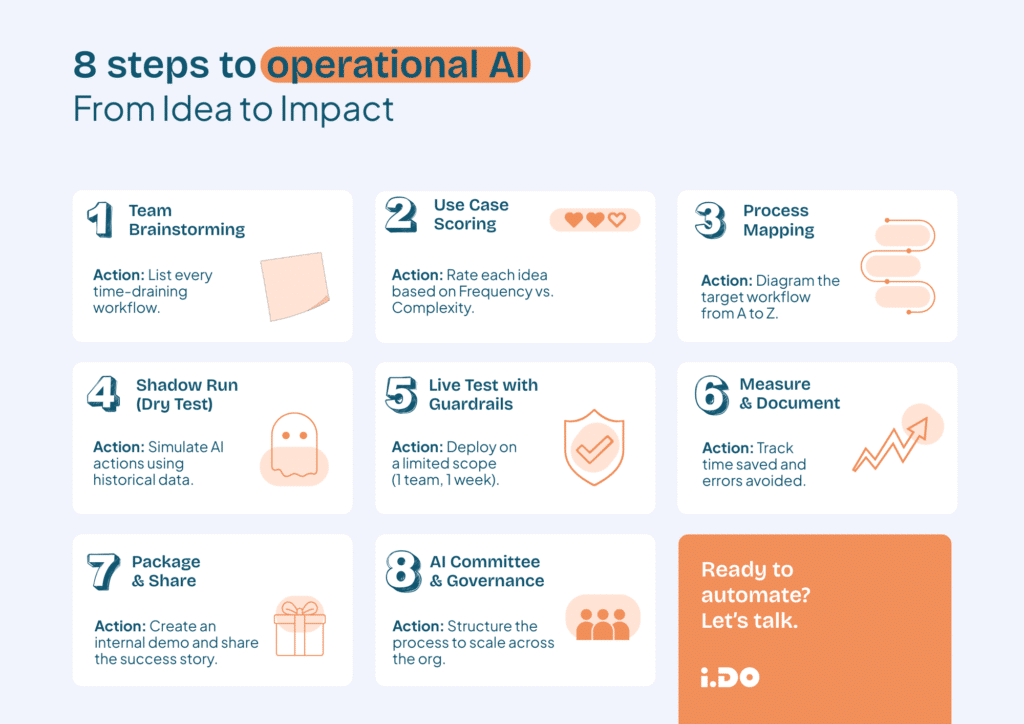
Start with the fundamentals: document your processes, centralize your work management, train your teams, and build the structured foundation that AI needs to multiply your success rather than your dysfunction.
The future belongs to organizations that can successfully partner with AI. The question is: will yours be among them?
Ready to move from theory to action?
Now that you understand the fundamentals of an AI-ready organization, learn the practical steps to implement AI workflows that drive real operational impact here.