Asana AI and Agentic Work Management: What Changed at Work Innovation Summit London
26 June 2026
By:
Bastien Siebman
Asana is no longer talking about AI as a side feature. The big shift is this: Asana is positioning itself as the operating system for human-agent teams, where people and AI agents work inside the same workflows, with the same visibility, permissions, and governance.
That matters because most companies still have an AI adoption problem, not an AI access problem. Asana opened with a striking stat from BCG: only 5% of companies report measurable productivity gains from AI. The issue is not a lack of tools. It is that AI is still too often individual, disconnected, and outside the real flow of work. What Asana is proposing instead is agentified workflows: AI embedded directly into the way teams plan, coordinate, decide, and execute.
The headline from WIS London
The platform underneath it all
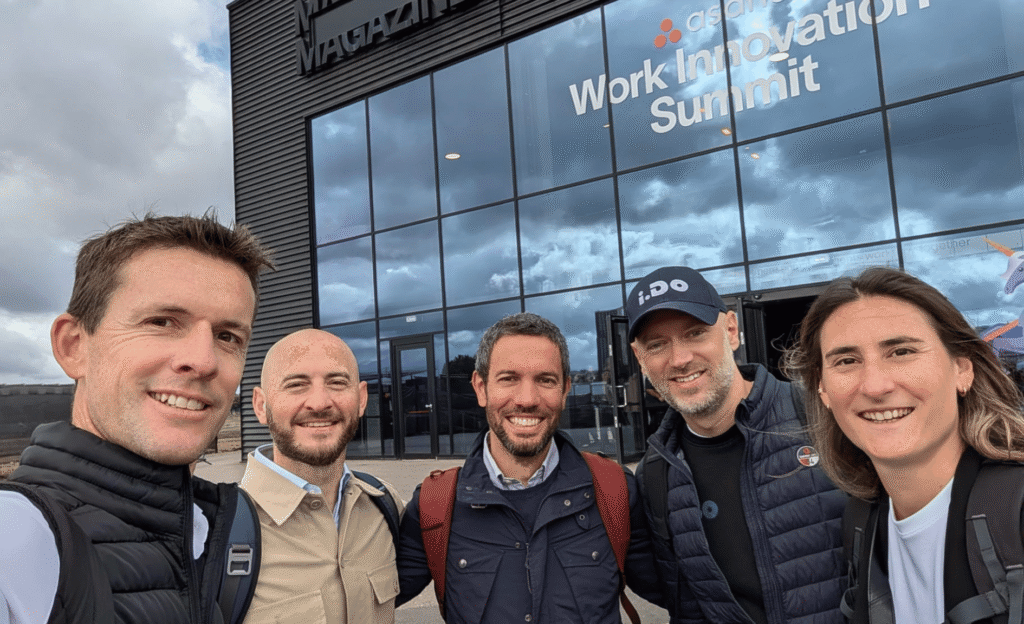
The message coming out of WIS London was clear: Asana is expanding beyond project and task management into a broader model of agentic work management.
At the center of that vision are five product experiences:
1. Agentic Work Management
This is the umbrella vision. It brings together AI Teammates, AI Studio, Asana Dash, and AI Connectors and MCP so teams and agents can run critical workflows together.
On Asana’s own AI page, the positioning is direct: this is the “easy button” for AI productivity across every team. The promise is not just faster execution, but a new operating model where AI helps with intake, routing, updates, prioritization, and coordination inside the same system where work already lives. Find out more.
2. Asana Client Management
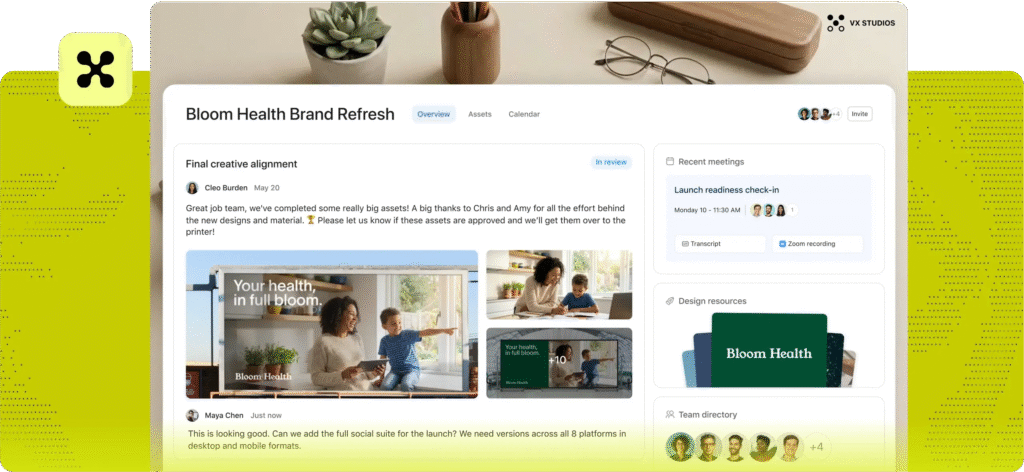
Asana is also packaging a clearer solution for teams delivering client work. The implication is important: instead of forcing client-facing teams to adapt generic workflows, Asana is building more specific experiences for account delivery, coordination, and visibility. Find out more.
3. Asana Service Management
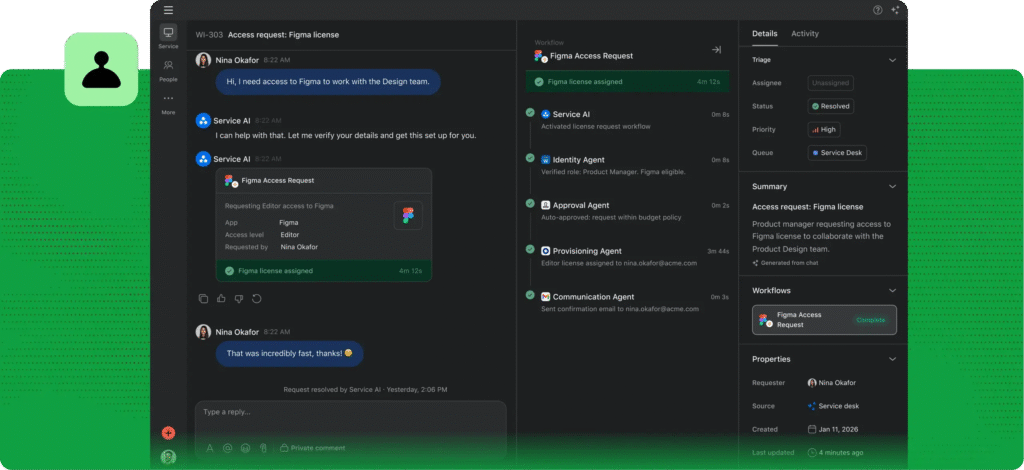
Internal service teams like IT, operations, and support are another clear focus. This points to a future where service workflows, requests, triage, and internal operations can be handled with much more structure and much less manual back-and-forth. Find out more.
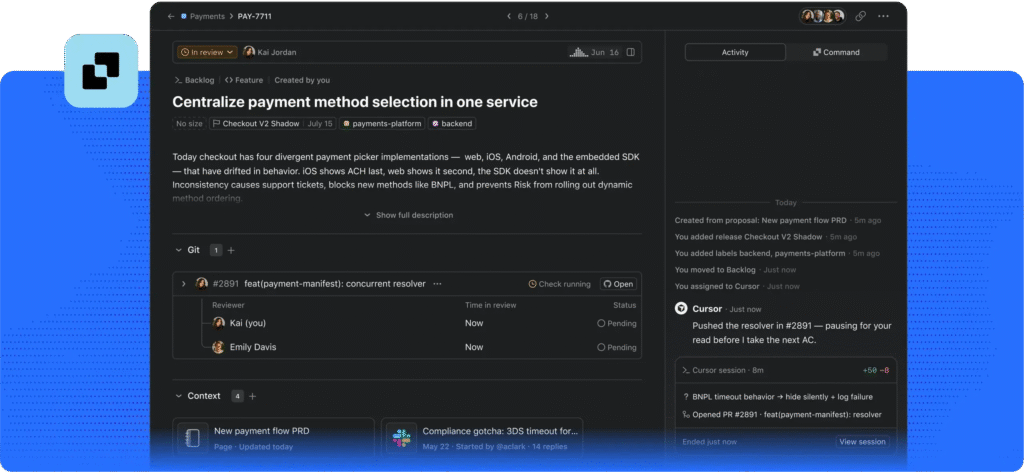
4. Command by Asana
Command is presented as a unified interface to orchestrate work. It reflects the same trend: fewer disconnected actions, more centralized control across teams, workflows, and AI-powered operations. Find out more.
5. StackAI by Asana
With StackAI, Asana is opening the door to building and deploying business agents for critical workflows. This pushes the platform beyond built-in AI features and toward a more customizable agent layer. Find out more.
These launches sit on top of two foundational layers.
First, there is the Work Graph: the structured map of who is doing what, by when, in what context, and with what dependencies.
Second, there is the Agent Platform: the layer that powers AI Teammates, AI automations, AI insights, and AI workflows.
This is probably the most important part of the story. Asana is not presenting AI as an external assistant floating above work. It is embedding AI inside the actual system of execution.
That changes the value proposition. Instead of asking people to copy information into separate tools, teams can keep work, context, and AI action in one place.
What stands out about AI Teammates
One of the strongest ideas in this release is the way Asana frames AI Teammates.
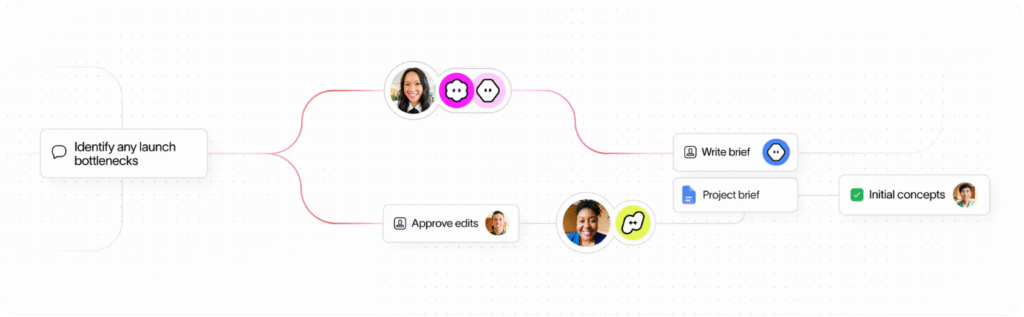
These are not described as generic bots. They are presented as teammates with a name, a role, an access level, and a purpose. According to Asana, there are already 30 prebuilt AI teammates for marketing, operations, and IT, designed to be preapproved, preauthorized, and ready to work without prompt engineering.
The release materials add useful detail here:
AI Teammates are built for collaborative work, not just individual assistance.
They improve over time through shared memory and contextual work data.
They operate within existing permissions and controls.
They can support concrete workflows like campaign management, request tracking, strategic planning, and portfolio management.
That last point is key. The promise is not “AI that helps you think.” It is AI that helps teams actually get work done.
AI Studio is getting more operational
The Spring 2026 release also showed how much AI Studio is becoming a practical workflow layer, not just an experimentation feature.
Two updates stood out.
AI-powered role assignment in project templates
When converting tasks into projects, teams can now map project roles dynamically using AI variables. That means the right stakeholders can be assigned to the right roles from the start, with less manual setup.
For teams running repeatable processes like campaign delivery, intake workflows, or project launches, this is a meaningful improvement. It reduces setup time and makes project creation more consistent.
Large file handling in AI Studio
AI Studio can now analyze large attachments, including complex Excel files, large CSVs, and PDFs. This expands the range of work AI can support inside Asana.
Instead of limiting AI to short text fields or lightweight inputs, teams can now use it to extract insight from reporting files, evaluate activity data, or support portfolio planning with richer source material.
In practice, this moves Asana closer to real operational AI.
Why this approach feels different
A lot of AI products still sit beside work. They summarize, brainstorm, or answer questions, but they are not deeply connected to execution.
Asana is betting on something more ambitious: AI should be part of the workflow itself.
That is why governance and trust matter so much in this story. On its AI product page, Asana emphasizes several safeguards:
AI partners do not use customer data to train their models
AI partners are required to delete customer data after each query
AI respects existing permissions and access controls
Teams stay in the loop and can guide AI at the right moments
This is more than a compliance message. It is what makes agentic work management usable in real organizations. Without governance, AI remains a demo. With governance, it becomes something operations, IT, and leadership teams can actually scale.
What this means for teams
For marketing, operations, PMO, and service teams, the direction is promising.
The value is not just faster writing or faster summaries. It is better workflow execution:
intake that captures the right information upfront
routing that reduces manual triage
project setup that assigns the right people automatically
reporting that surfaces risks and progress faster
search and planning that become more context-aware
AI support that is embedded where work already happens
That is a much more useful benchmark for enterprise AI than generic productivity claims. It is about reducing coordination drag.
What it means for i.DO clients
At i.DO, this release confirms something we have been seeing for a while: Asana is no longer just a destination for project tracking. It is becoming a platform for orchestrating work across humans, automations, and AI agents.
That changes the conversation.
The real question is no longer “Should we add AI to our organization?” It is “Which workflows are mature enough, structured enough, and important enough to be agentified inside the system where work already happens?”
For clients, that opens a more strategic path:
redesign intake instead of just speeding it up
embed governance from day one
treat AI as part of the operating model, not an extra layer
prioritize workflows where visibility, coordination, and repeatability matter most
FAQ
What is the biggest takeaway from WIS London?
Asana is repositioning itself from a work management tool to a platform for human-agent collaboration. The focus is now on agentic workflows, not isolated AI features.
What are the most important new capabilities?
The biggest themes are AI Teammates, AI Studio, Asana Dash, AI connectors, and the broader packaging of client management, service management, Command, and StackAI.
Are the Spring 2026 updates only about AI?
No. They also improve reporting, search, resource planning, admin controls, and operational governance. That is what makes the AI story more credible.
Why does this matter for enterprise teams?
Because enterprise teams do not need more disconnected AI tools. They need AI embedded into real workflows, with permissions, control, and visibility built in.
Final take
The most interesting part of Asana’s latest announcement is not a single feature. It is the coherence of the direction.
Asana is building toward a model where work is no longer managed by humans alone, and where AI is no longer treated as a separate assistant sitting outside the system. If the platform delivers on that vision, the real gain will not be faster task execution. It will be better coordination across the workflows that matter most.
And that is where the opportunity starts to get serious.