


When it comes to AI, if you don’t feel ready, that’s probably because you are not.
After using AI a lot in our daily lives and within Asana, there is one thing that is super clear for me: adopting AI in the workplace should be done on top of a healthy foundation. Clear processes, clear ownership, trust in the team: those are the three elements that are key before you adopt any AI solutions. And you’re in luck, because that’s exactly what AI needs in order to perform well.
In this month’s edition, we are reviewing the latest updates from Asana. There’s a lot, and we also discuss the future of AI and the future of work.
5 Asana news
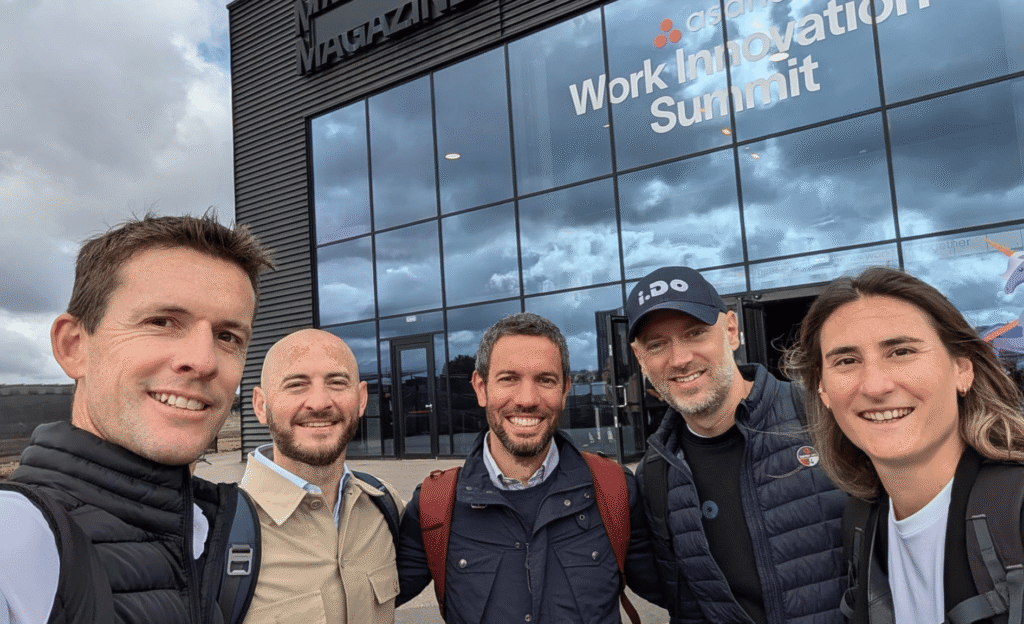
At the Asana Work Innovation Summit in London last June, there were 3 new products and an acquisition announced, in addition to the official new category Asana wants to create. More details in our blog post.
🧭 Command by Asana: Asana is directly competing with Jira with a brand new product to manage dev tickets, including AI coding agents you can trigger directly from within Asana!
🛠️ Asana for Service Management: ever wished Asana was better at ticketing? They heard you, this new Asana add-on will bring new dedicated features around ticket management.
🎯 Asana for Client Management: if you work with clients yourself, you’ll probably enjoy this new upcoming add-on including specific features like a client portal for your customers!
🔌 StackAI by Asana: Asana just acquired StackAI, which will give Asana a lot of new capabilities when it comes to connecting with other tools.
🤖 From Collaborative Work Management to Agentic Work Management: AI teammates were the tip of the iceberg, Asana is moving from the CWM space to the AWM category, where agents and humans collaborate!
🤖 Are you ready?
The world is changing, and you’re probably seeing a lot of the apps you use every day change as well. They are adding features at a pace never seen before, and a lot of those features are AI-related. Asana falls into the same category.
With all of that comes the peer pressure: use AI, do more, work faster.
You do not have to adopt everything right away. When you look at the news, Twitter, and LinkedIn, you feel like you are behind. The reality? Only a very small percentage of the population is actually ahead and using the latest AI trends.
That said, what’s coming is a real opportunity to get ahead of the competition with just a few efforts. Take Asana: the AI Teammate update is what I consider to be the future of work. We’ve used AI Teammates for a while now, and we’ve seen a lot of other apps and a lot of people converge to the same conclusion: the future is collaboration between humans and agents.
It’s going to be a very long time before agents have the autonomy to do everything, and before humans trust them enough to give them that autonomy.
But involving AI Teammates, or any agents for that matter, in your day-to-day work means you need clarity on your processes and workflows. If you want to keep humans in the loop, you need to be clear about the steps, the accountability, and the handover between humans and agents. There is no way around that.
Sit down with your team. Clean up all the processes, map everything out, simplify if you can. Then, and only then, start automating.
It’s not going to work right away. It might be ugly, it might be a mess for a while. But then you’ll see one workflow after another become a little more streamlined, take a little less time, with mistakes not being made anymore. You’ll even see agents suggesting things you didn’t think about, or finding things you would not have found without them.
Keep pushing. There’s not going to be a big shift overnight. It’s really going to be little bricks you put on top of each other. Within six to twelve months, you’ll realize a big chunk of your work is actually automated, and you were able to either work less or do more with the same resources you had.
As a follow-up, you should read this piece by my colleague Arthur: Are You Mature Enough to Implement AI in Your Organization?.
🧙♂️ Asana geek riddle
You want to be in the shoes of an Asana consultant for a minute? Here’s a real example from a session:
🎙️ “Am I ready to adopt Asana AI teammates?”
🤔🤨🧐
🎓 Probably not if your processes are still unclear. AI teammates usually amplify the way your work already runs, so if ownership, inputs, and handoffs are messy, they will scale the mess too. You can delegate a piece of a process to a teammate. If that piece is unclear, you’ll spend more time re-directing the teammate. And I am not gonna lie: if you aren’t all in on Asana, it won’t work well. If you never use comments in Asana, if you barely use tasks and never assign work or use due dates, you’ll struggle to find use cases.
But once you have that clarity, teammates are really the future. We are experiencing them first hand every day, and it is 🤯🤯🤯
🎙️ My opinion on…
…new pricing models around AI credits.
If you haven’t noticed, a lot of SaaS are adding AI features. Some are free and included in your tier, but most will rely on some form of credits. This is inevitable: Asana, like all the other apps, are buying credits from OpenAI, Anthropic… They have to charge back those credits to you. The only way to not do that is to charge you a fixed fee, either hoping you don’t go crazy, or putting caps on usage.
Credit-based models are clearly the future and we need to get used to it: most apps will adopt those pricing strategies. It will require some getting used to, but that might also be an opportunity to only pay for what you use!
In the future, you might even be able to bring your own AI to your tools, and maybe use free open source models!
Sign up for our Asana newsletter
Read about the new Asana features and get updates and tips, every month, written by i.DO’s passionate experts.