

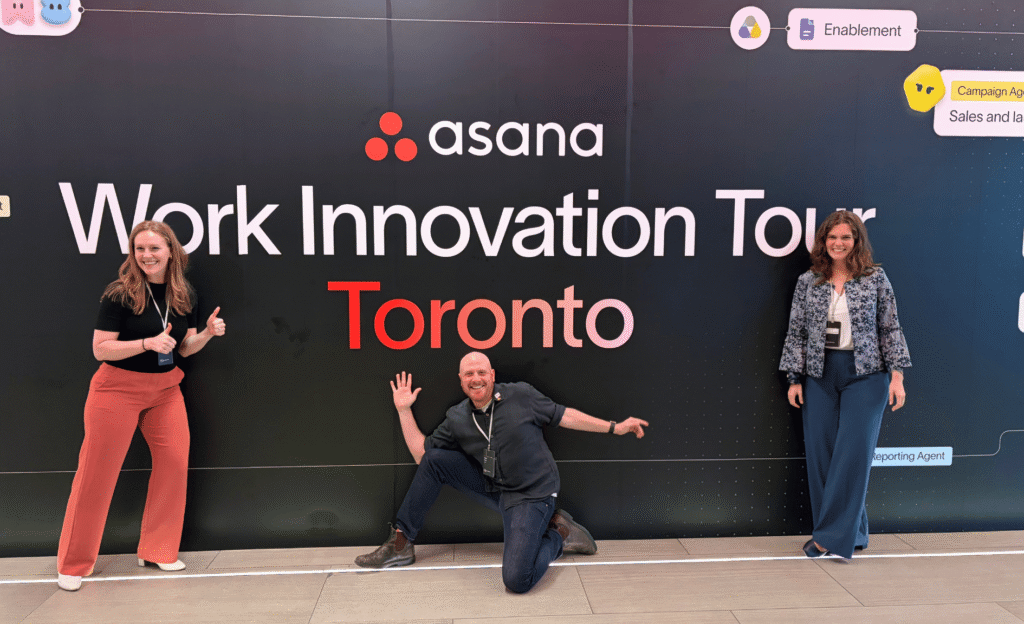
Too much time chasing updates. Too many handoffs without clear ownership. Too little visibility across teams. Our key takeaway from Work Innovation Tour Toronto was that better work management depends on four connected priorities: useful AI workflows, sustained adoption, shared visibility for hybrid teams, and lessons from real customer implementations.
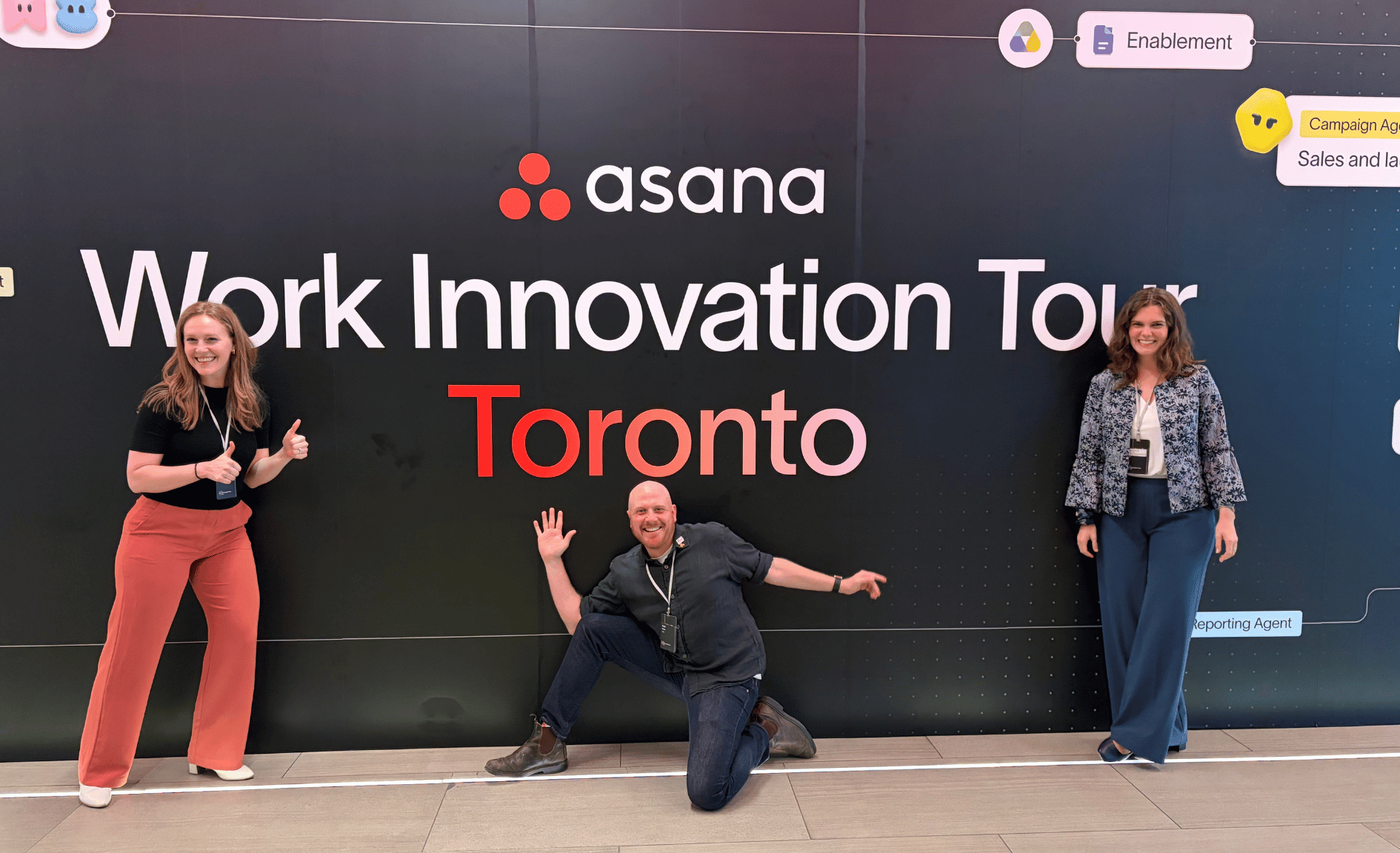
The i.DO team sponsored and attended the event, joining the Asana community for keynotes, customer stories, and conversations with work management leaders. The discussions reflected challenges familiar to operations managers, PMOs, and executives: how do you turn investment in technology into a better way of working?
Here are the four themes that stood out, followed by practical ways to bring them into your organization. The recommendations below build on our event takeaways; they are not accounts of specific customer deployments.

1. AI workflows need a clear operational purpose
AI and automated workflows were a major focus in Toronto. Across the sessions, the emphasis was on freeing teams from repetitive administrative work so they could spend more time on higher-impact initiatives.
For an operations team, the useful starting point is a recurring bottleneck. Where does work wait? Which information gets copied between systems? Which requests arrive without enough context to move forward?
Before introducing AI, define the workflow it will support:
- Inputs: What information must be available for the work to begin?
- Ownership: Who is responsible for the next action?
- Review: Which decisions require human judgment?
- Success: What will you measure to know whether the change helped?
For example, a team could assess a repetitive request-triage process as a potential AI use case. The first step would be to define request categories, routing responsibilities, and exceptions, rather than automate an inconsistent process.
Measure the current handling time and rework rate before a pilot. That gives you a baseline for evaluating results without assuming that adding AI automatically creates value.
2. Asana adoption requires governance and change management
Buying software does not establish a shared way of working. Adoption and change management came up repeatedly in customer discussions and panels, especially around scaling consistent practices across an organization.
As teams grow, small differences become operational problems. One department uses “In progress” to mean work has started. Another uses it to mean a request has been accepted. Leaders looking at both teams cannot reliably interpret the status.
Shared conventions make work easier to understand. The event highlighted practical foundations such as field library conventions and structured templates.
For organizations developing their Asana adoption approach, a useful governance checklist is:
- Agree on common definitions for priority, status, and ownership.
- Identify which information should be consistent across departments.
- Define who maintains shared conventions and reviews proposed changes.
- Build training around everyday responsibilities, including requesting, delivering, and reviewing work.
Keep governance focused on decisions people actually need to make. If a field does not help someone prioritize, act, or report, question why you are asking teams to maintain it.
3. Hybrid collaboration must connect office and field teams
Conversations in Toronto reinforced that hybrid work extends beyond the office-versus-home discussion. Some organizations need to connect employees at desks with colleagues working across field sites.
When those groups rely on separate updates, operational silos form. A field team may know that an activity is delayed while the office continues planning against an outdated timeline.
The need is a single source of truth that supports a consistent view of work across desktop and mobile environments. The operating model matters as much as the platform: teams need to know where an update belongs and who acts on it.
To assess your own workflow, follow one handoff from start to finish:
- Identify the information the receiving team needs.
- Check where that information is recorded and whether both teams can access it.
- Clarify who updates progress, blockers, and deadlines.
- Identify any duplicate records that could leave colleagues working from different information.
This exercise gives leaders a concrete starting point for improving cross-team visibility, without treating every communication problem as a reason to add another tool.
4. Real customer stories make transformation easier to evaluate
Keynotes and peer panels brought work management into practical focus. Hearing how organizations use modern platforms helped connect digital transformation ambitions with everyday work.
For teams considering a change, a useful customer story answers more than “Which software did they buy?” It explains the original problem, the workflow changes, the adoption effort, and the evidence of improvement.
When evaluating a case study, ask:
- Was the original challenge similar to ours?
- What changed in responsibilities and working habits?
- How did the organization support adoption?
- Which results were measured, and over what period?
Use those answers to shape a pilot suited to your context. A relevant lesson is more valuable than copying another organization’s entire setup.
Turn the Toronto takeaways into a focused pilot
The four themes point toward a practical next step: choose one workflow where manual coordination, unclear ownership, or fragmented updates create friction.
Document the current process, agree on shared conventions, and involve the people who perform the handoffs. Then test a targeted improvement and review the results before expanding it.
As an Asana Solutions Partner, i.DO brings together expert Asana consultants to help organizations connect platform decisions with the way their teams work. Following Work Innovation Tour Toronto, we are bringing these insights into conversations with clients about process optimization and sustained adoption.
Want to apply these takeaways to your organization? Talk to the i.DO team about the workflow you want to improve, whether that means reducing manual coordination, strengthening Asana adoption, or connecting office and field teams.
Frequently asked questions
What were the main takeaways from Work Innovation Tour Toronto?
Our four main takeaways were the growing focus on AI-driven workflows, the importance of adoption and change management, the need for shared visibility across hybrid teams, and the value of practical customer stories.
How should organizations approach AI in work management?
Start with a defined operational problem. Clarify inputs, ownership, exceptions, and human review before introducing AI. Establish a baseline so you can evaluate whether the pilot improves handling time, quality, or coordination.
What helps organizations sustain Asana adoption?
Shared working conventions, clear governance, structured templates, and training tied to daily responsibilities provide a practical foundation. Teams need to understand both where work belongs and how they are expected to maintain it.
What should hybrid teams prioritize when improving collaboration?
Prioritize a shared record of work, clear responsibility for updates, and access suited to both office and field colleagues. Review handoffs to find where information becomes fragmented or outdated.